Driving & Parking - DOUBLE DRAGON (1994)
The second video game film adaptation ever made trips over its own feet the entire runtime.
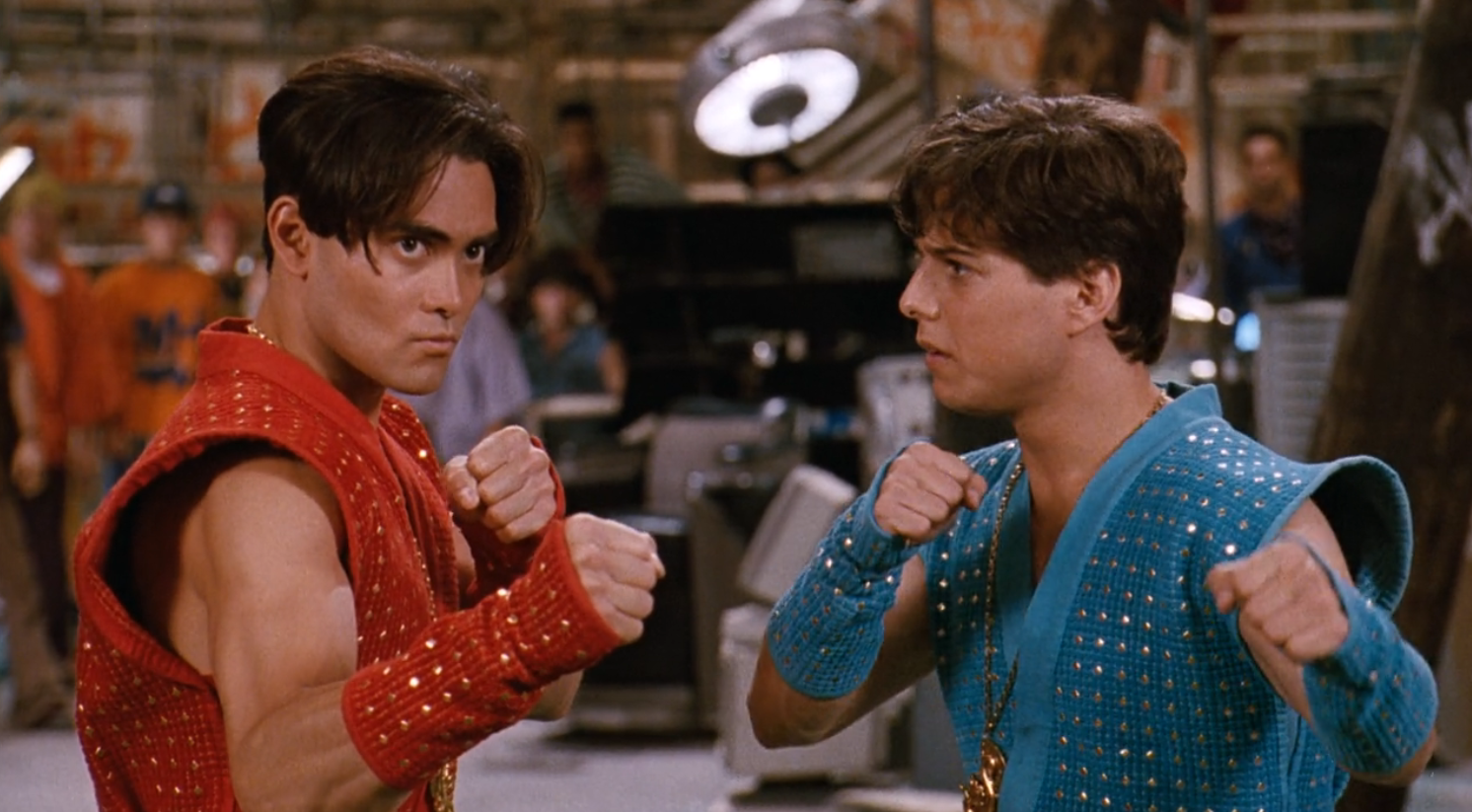
In 1994, America was in a hot hot economy. GDP was way up, unemployment was way down, jobs were being created at a manic pace, and the country was just a year away from the Dot-Com Bubble that would jumpstart the economy even further.
1993 and 1994 were also a very exciting time in the video game market: a series of Senate hearings over these two years would determine the fate of censorship and ratings systems on video games, after Senator Joe Lieberman (Connecticut) found himself morally shocked by the amount of violence in Mortal Kombat. Within months, video games found themselves mired in a mini Satanic Panic that concluded with the creation of the ESRB Ratings System for video games.
While all this was going on, JURASSIC PARK (1993) was sweeping the nation, ALADDIN (1993) was scraping up any kids that got left behind by JURASSIC PARK, and several movies based on video games were in the works. It may be best not to mention the SUPER MARIO BROS. MOVIE (1993), the first video game film adaptation; which was a commercial flop, but we cannot deny that it broke the seal to allow more video game movies to be made.
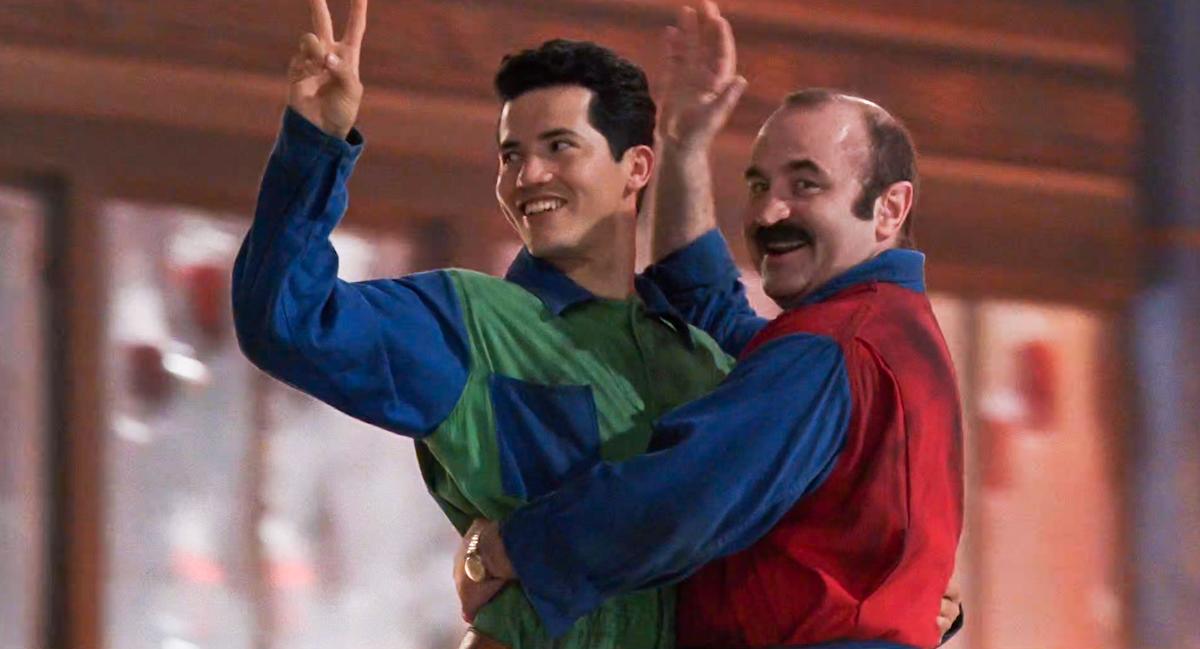
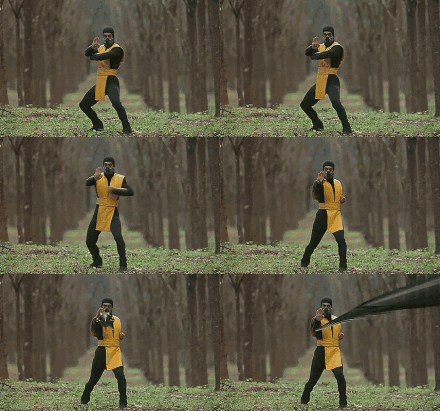
Of the Big Three fighting-game movies that were all in production at the same time, DOUBLE DRAGON (November 4, 1994) edged out STREET FIGHTER (December, 23, 1994) and MORTAL KOMBAT (August 1995) with an earlier release, probably hoping to sweep the market before the other two could get their [metal] hooks in.
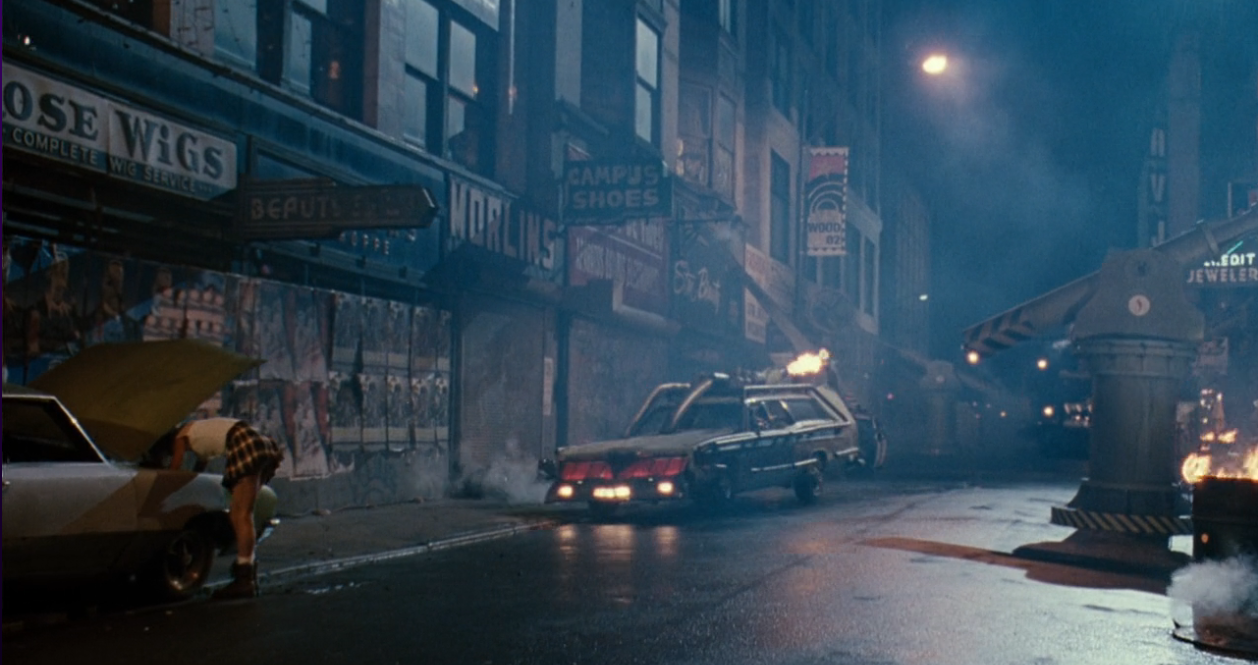
It was not enough, unfortunately: DOUBLE DRAGON was a commercial and critical failure, returning just over half its cost at the box office. But, if you watch it (and it's currently on Tubi!), you might actually be surprised that it did so poorly. I mean, this movie looks pretty damn good for a kids' martial arts video game adaptation. In fact, I'd go so far as to say it looks pretty damn good, period.
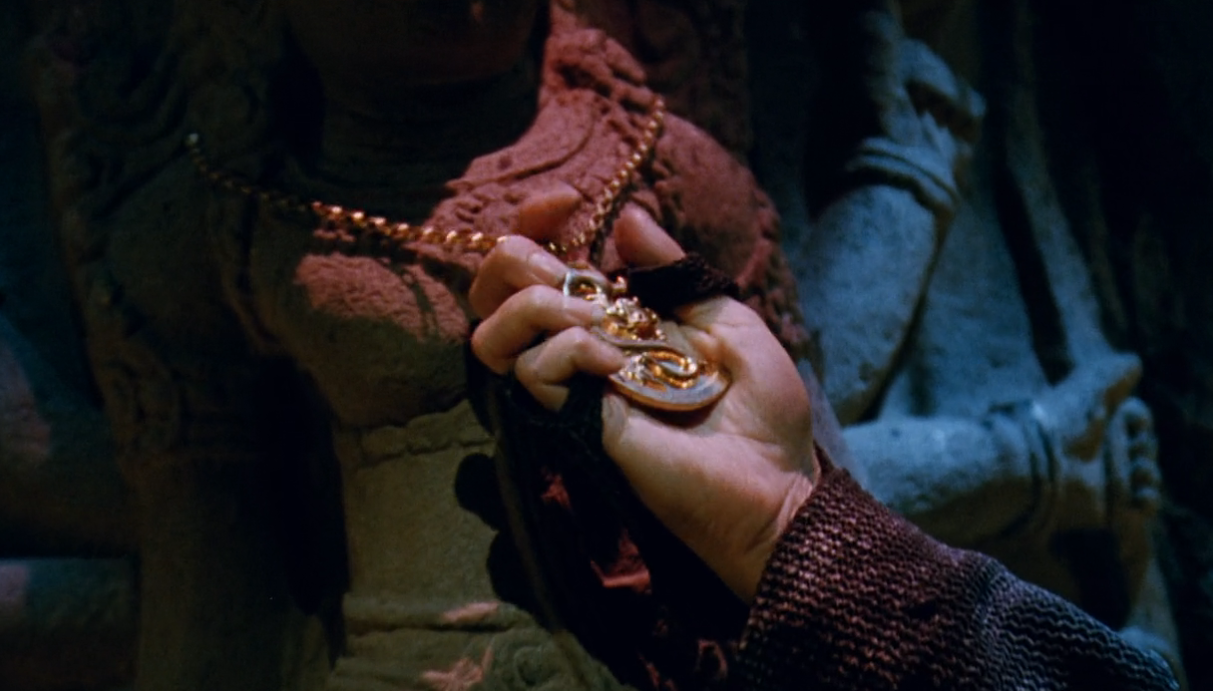
DOUBLE DRAGON is director James Yukich's film directing debut, and all the failings thereof are not because of the art department. Yukich (like Tarsem Singh when he did THE CELL), had directed music videos and TV specials before DOUBLE DRAGON, and apart from certain scenes and sets, most of this movie looks made-for-TV. Some effort was made to include characters and imagery from the game, especially the titular dragon pendant, and like Atreyu's medallion in THE NEVERENDING STORY (1984), the Double Dragon pendant has a great look to it that shows up really well on film.
We cold-open with a fight "Somewhere in China" (love that for them) between ninja and monks, which ends up being a very one-sided slaughter. A ninja slithers into a candlelit cave and rips the dragon medallion from the neck of a beautiful Bodhisattva statue (luckily, the chain's clasp is made of paper, so it comes right off).
Suddenly, a shock for the audience: the ninja pulls out a high-tech briefcase with a satellite dish, radio, and a lot of buttons, and rips his ninja mask off: it's a lady! A lovely blonde lady with a radio! This isn't Ancient China at all, it's nowadays-ish!
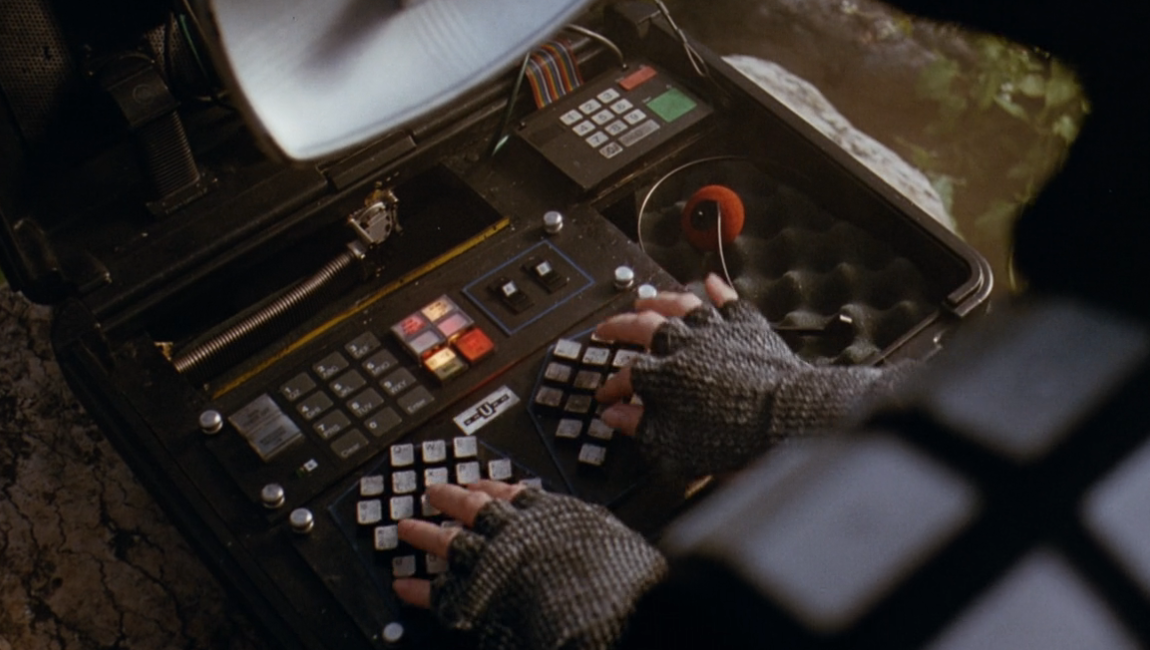
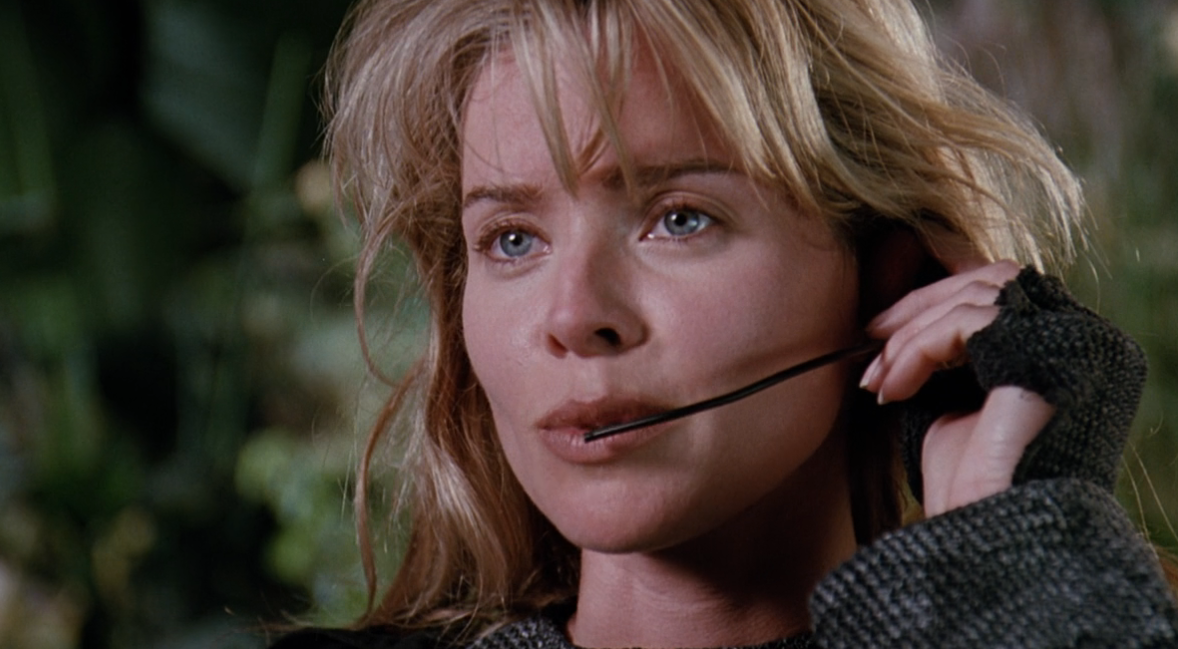
"Shuko? Lash? We've found it."
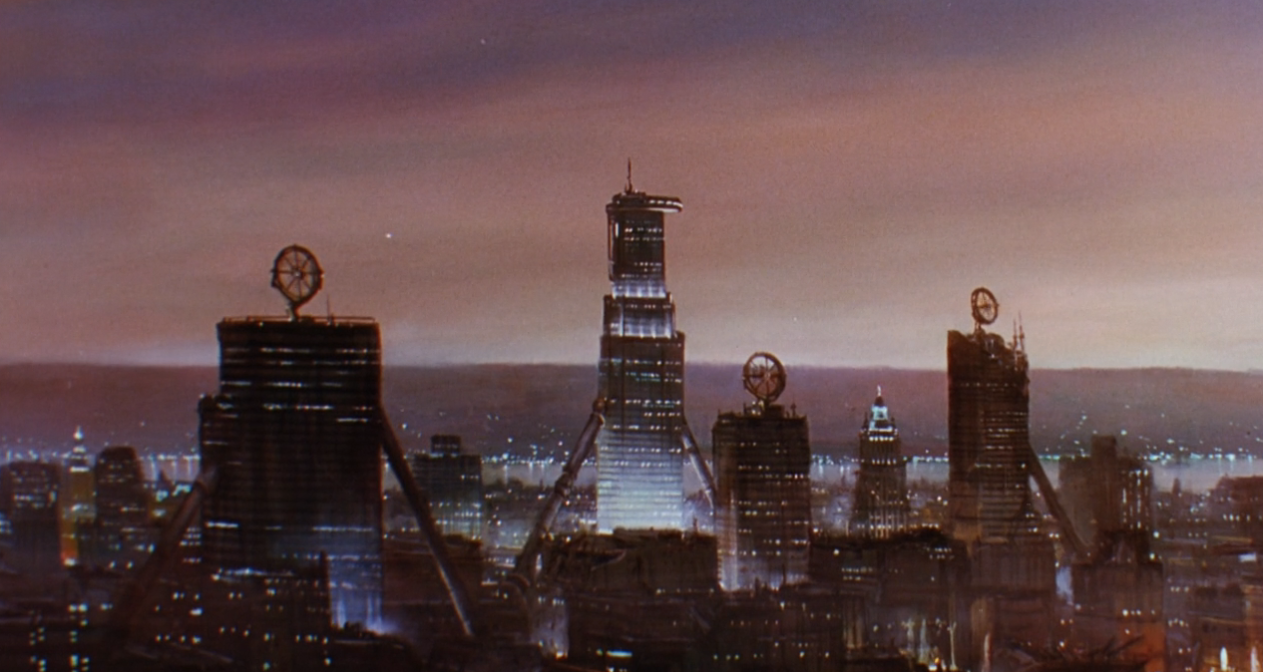
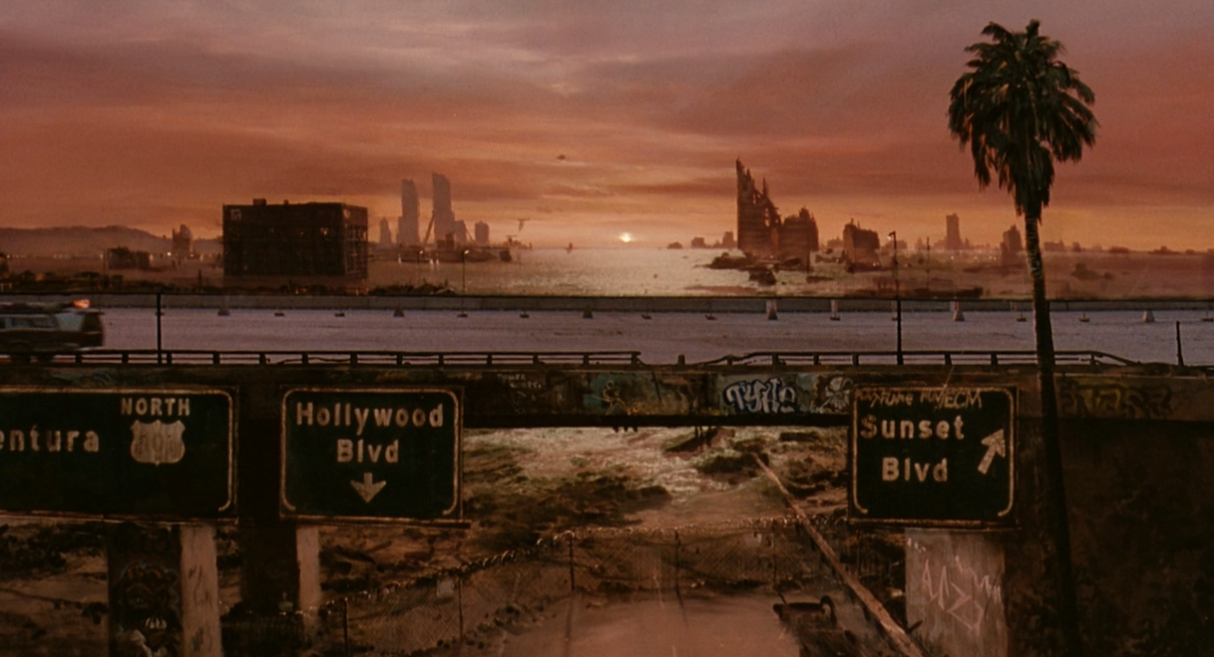
We are not exactly in "nowadays" (1993), but the frightening near-future of 2007. Los Angeles has been ravaged by a horrible earthquake and has become a total dystopian hellscape, with irregular and unreliable electric power, miserable brown skies and polluted air (oxygen vending machines are on the street, where you can pay to breathe. Get it?). This post-apocalyptic New Angeles is ruled over by the Shuko corporation, who has all the money and all the power and presumably most of the nice breathable air.
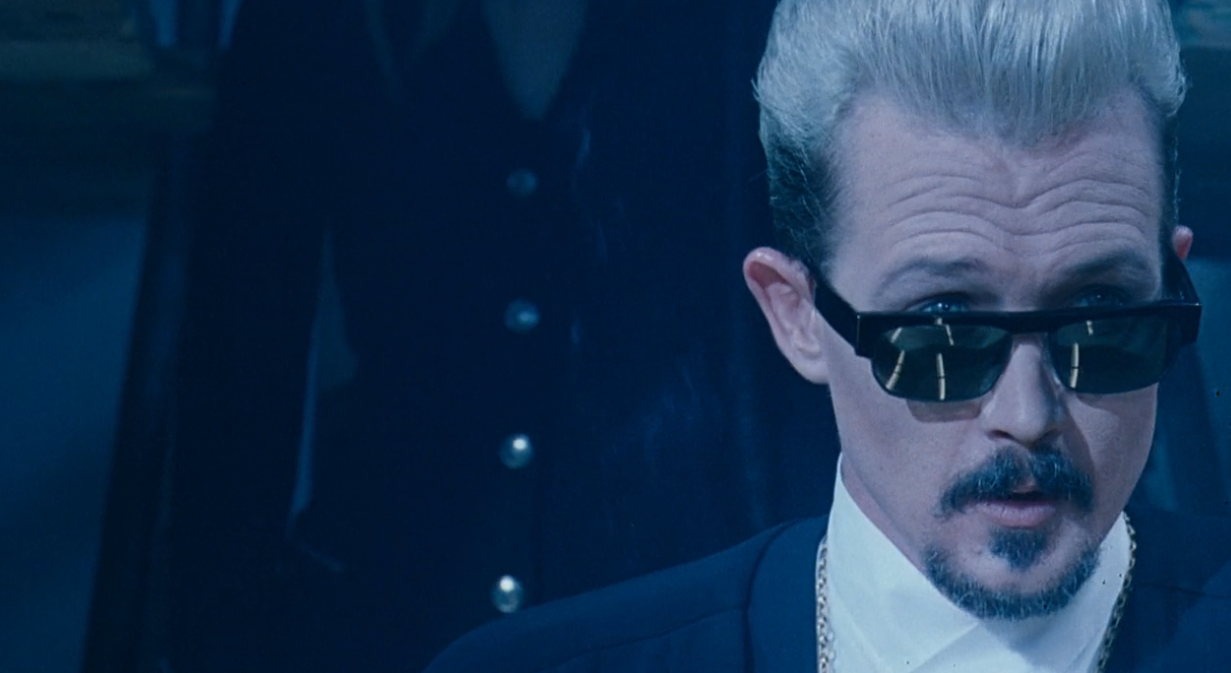
Our mad villain styles himself as Koga Shuko (revealed later to really be named Victor Guisman), and here, as elsewhere in the film, the costume designers really outdid themselves for a film that didn't really care. Shuko is dressed in a quasi-Asian style with a diagonally-wrapped shirt, long collarless jacket and spiked up, frosted hair. He is serving Middle Aged Johnny Depp (not necessarily a bad look, eh?). He is our Corpo overlord, obsessed with finding both halves of the Dragon pendant so he can unlock ultimate Power.
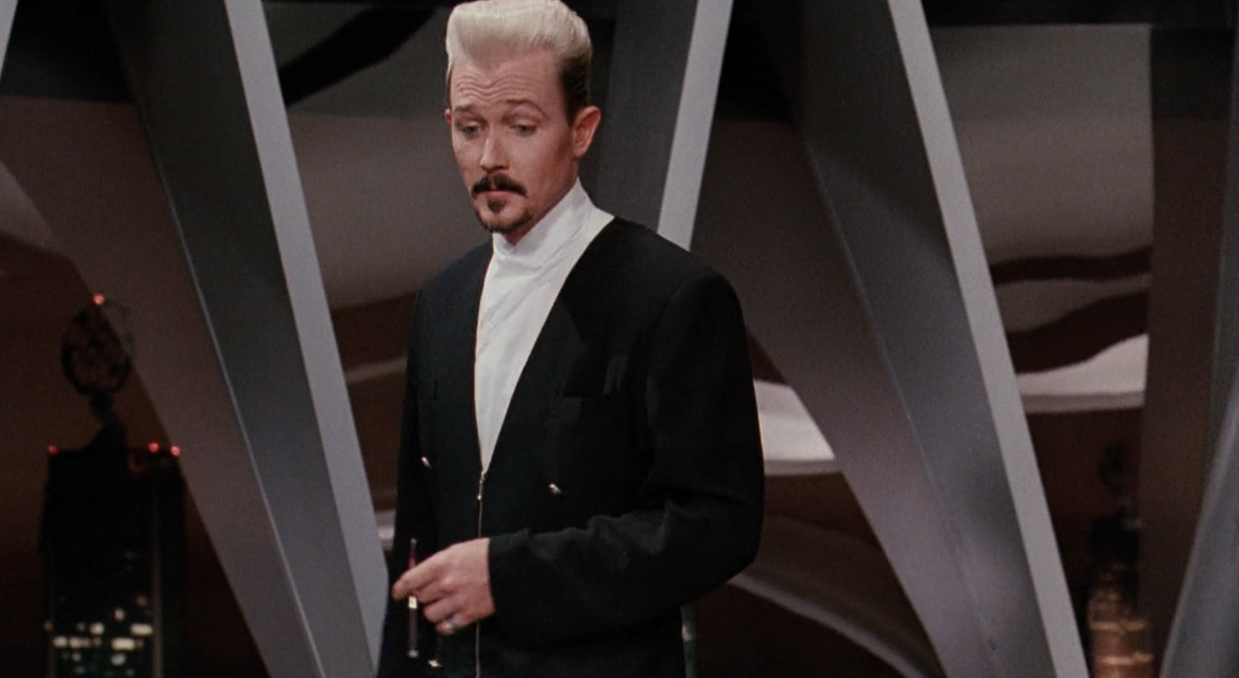
I really appreciate the visual style we get in these scenes. Shuko and his minions are standing around in this dramatic architecture, all chrome and glass and sunglasses and cigarette smoke (of course he smokes with a cigarette holder, because he's eeeevil), and the camera rotates slowly around this set that's lit nice and flat and bright as if for TV. The production level in this movie is quite high. Too high!
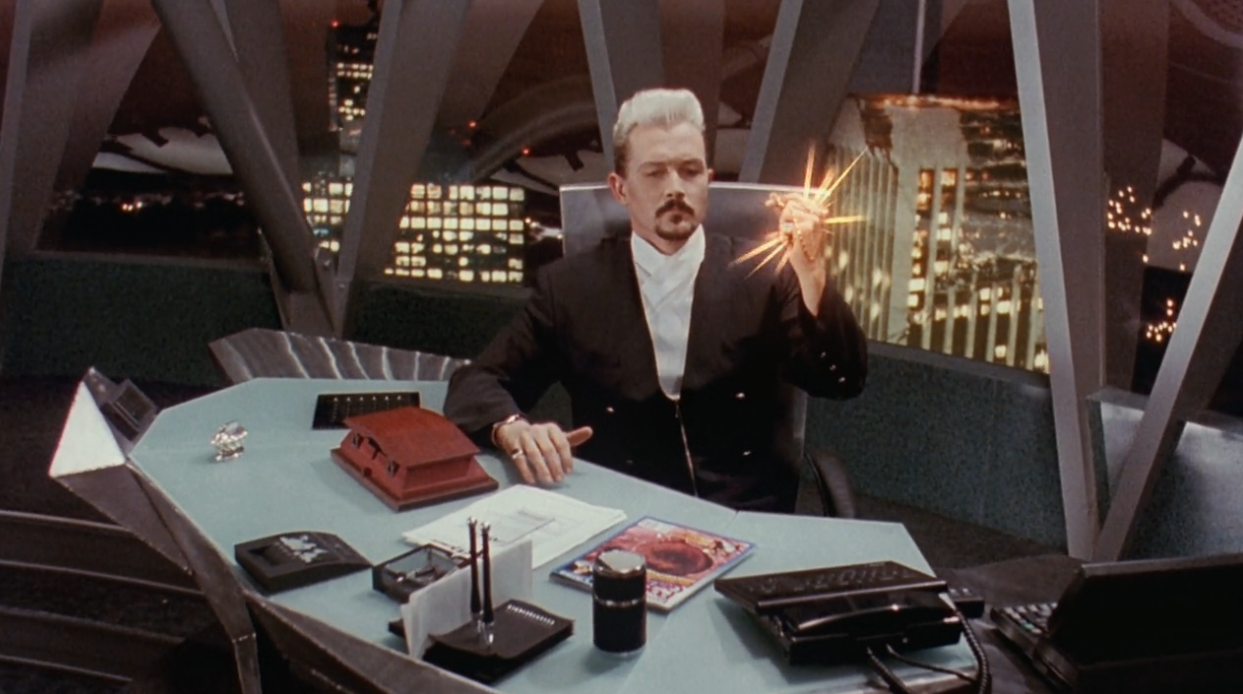
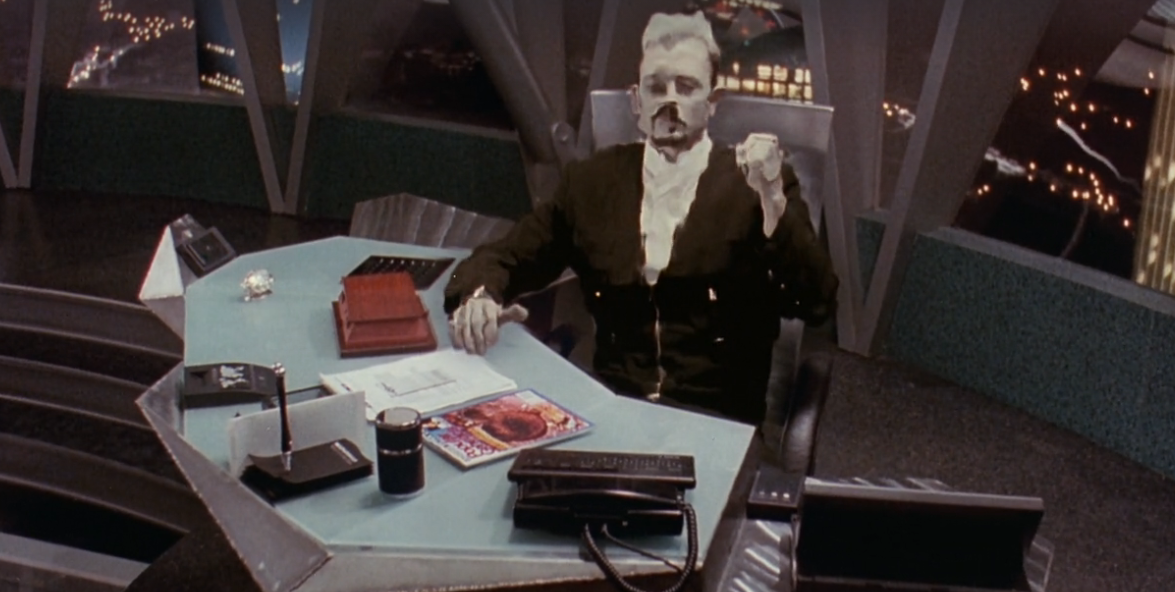
As our villain grasps the Dragon Pendant, it begins to glow. Apparently it has no method of distinguishing good from evil, or doesn't care about the hand that wields it. It grants him the power to turn greyscale and wobbly, and with a demonic glint he shouts "Find me the other half now!"
The other half of the pendant is, of course, in the possession of our main characters– kind of. It's around the neck (and totally in public view) of a nice lady who's watching the most 90s event on God's green earth. Yes, a kumite!
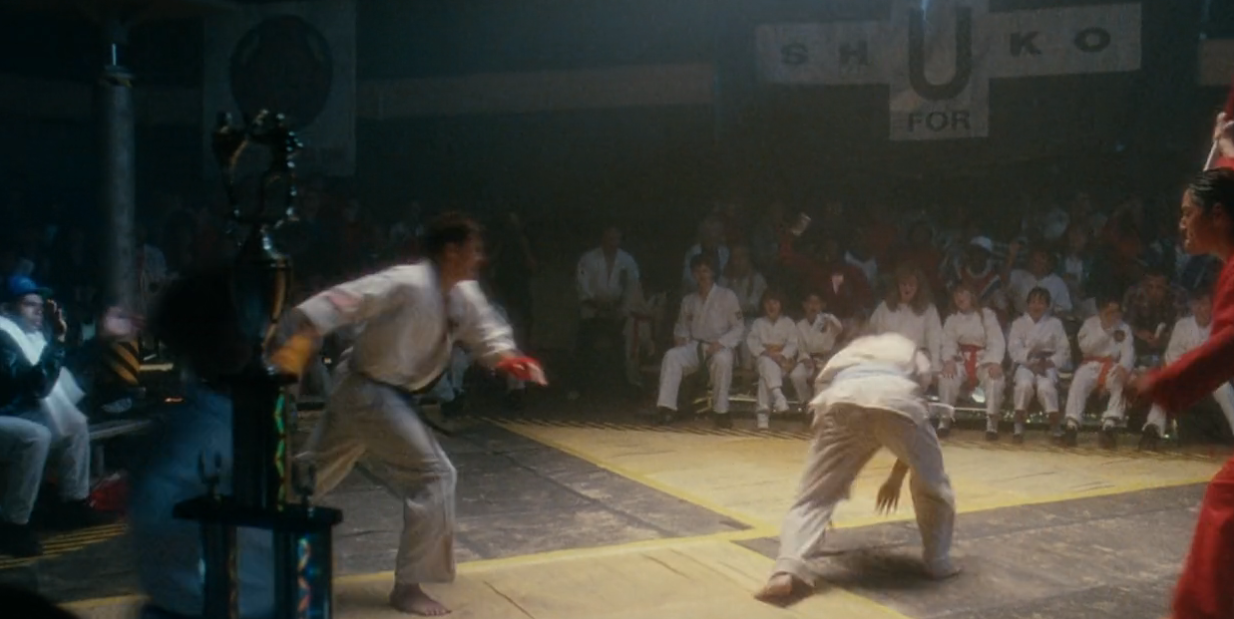
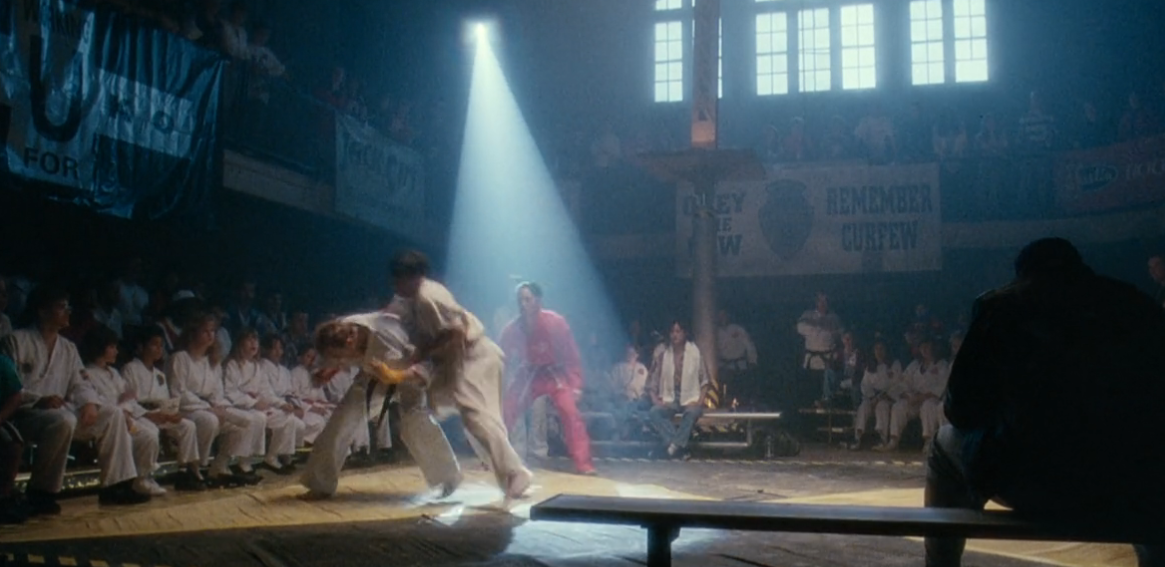
We are finally introduced to the 'brothers' and the main characters of our film: Jimmy and Billy Lee, who are tag-team kicking ass in this kumite while this lady watches and encourages them. It is unclear to me after two watchings, but Wikipedia insists this lady (Satori) is their adoptive mother. I can't tell if the brothers are themselves adopted brothers or supposed to be actually blood-related, especially as one of them, younger brother Billy (Scott Wolf) has a broad Bawston accent. Elder brother Jimmy (Mark Dacascos) is both better-looking and a better actor.
Both Lee Brothers are goofy, gawky, wide-eyed and perky as a couple of Mouseketeers. Even though they are supposed to be late-teen-to adults, they give a performance that's suitable for a cartoon. This has got to be a directorial choice, because Wolf and Dacascos give little flashes of ability to give a more serious and restrained performance– but the movie pulls back from these serious moments and devolves into slapstick and goofy gags.
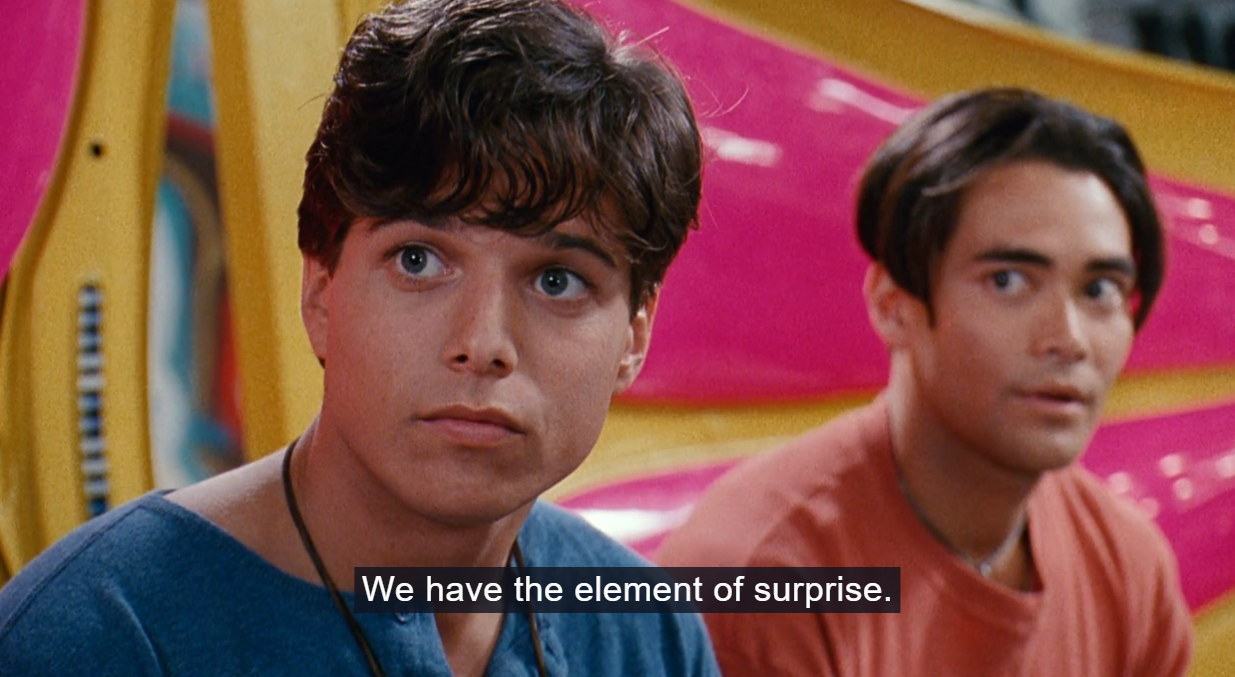
Although Dacascos was actually a martial artist when cast as Jimmy Lee, neither of these actors look like action heroes. The haircuts and styling (two-button t-shirts and jeans?) make them look even younger (Dacascos was 30 at time of filming; Wolf was 26). It seems that despite the somewhat serious stakes of an evil corporate tycoon, a bombed-to-shit LA and gang violence, this movie is actually supposed to be for kids. In 1994, everyone in America thought video games were for 8 year olds, after all.
After the Lee brothers leave the kumite with (their mom?) Satori, their drive home is ruined by a trap run by a local gang. The boys have to hit the afterburner on their legally-distinct Ghostbusters Car to escape--
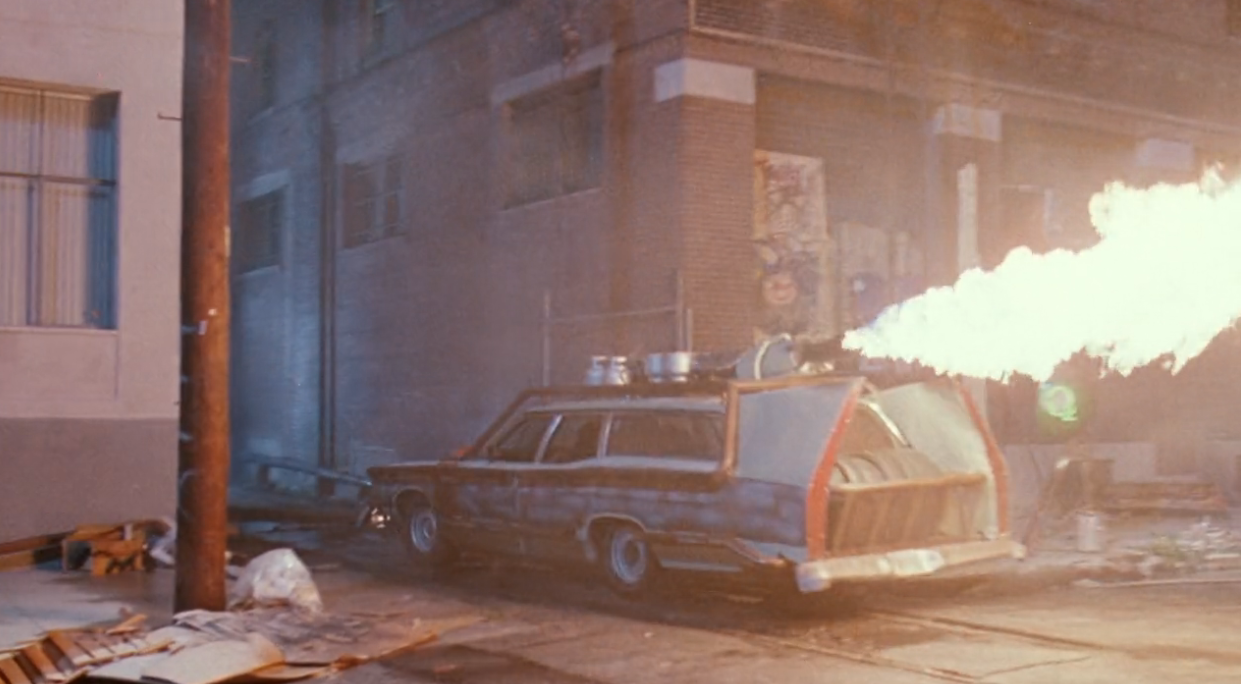
--and the gang members, who are all dressed to the nines in post-apocalyptic punk in the finest 80s and 90s manner, guffaw and hoot in their MAXIMUM OVERDRIVE truck while trying to crush the Lee brothers. We even get a sample of the movie's sense of humor in this fourth-wall-breaking line:
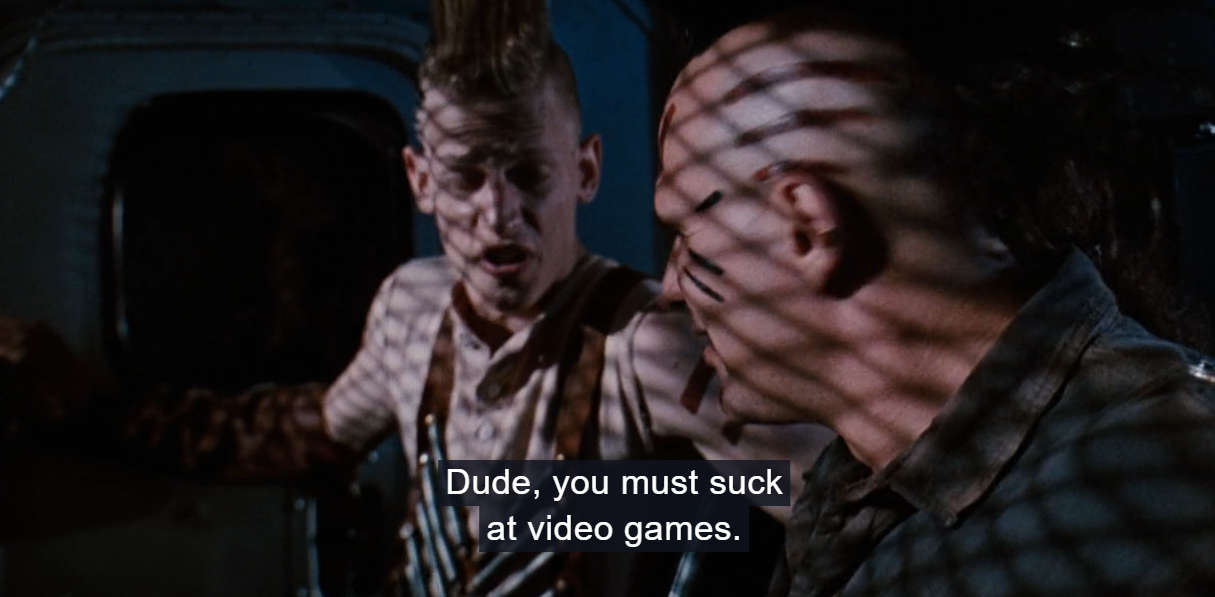
Har har!
It's a little bit unclear whether the gang intends to kill their victims, rob them or just run them out of their territory. The movie tries to convince us that the police and the various violent gangs have reached a shaky truce, where gangs roam and murder after curfew (which is broadcast on the news and other TV channels via a large blinking countdown clock, along with verbal reminders not to stay out), and police keep some kind of order during the day. If you're a law-abiding citizen, you better remain indoors after the sun sets.
One of these law-abiding citizens is Marian, who lives with her cop dad and little brother in a lovely suburban home just a few miles from the burned-out hellscape that is LA. Dad is a daytime beat cop, and he remembers Los Angeles before the earthquakes that ravaged the city and left the entire area in ruins "with no help from the Feds".
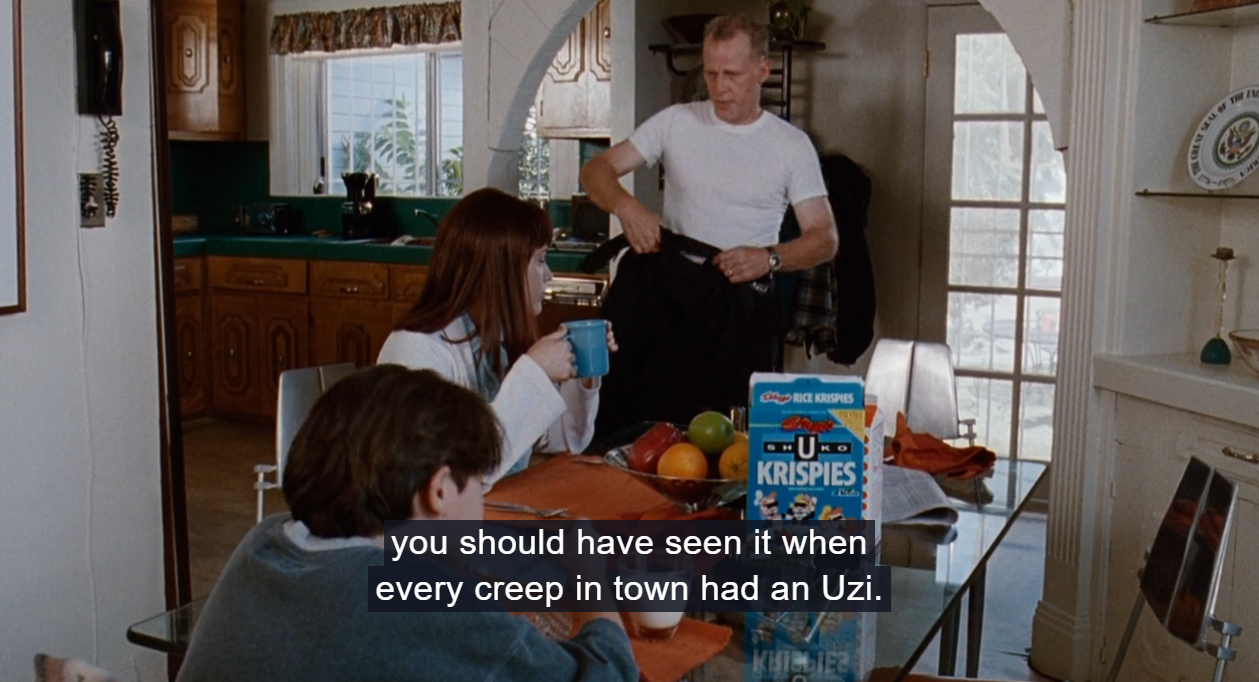
The morning news mentions the "Power Corp", an underground group that Marian claims "cleans up the mess in the morning and fights against the gangs", but are also popularly seen in a different light:
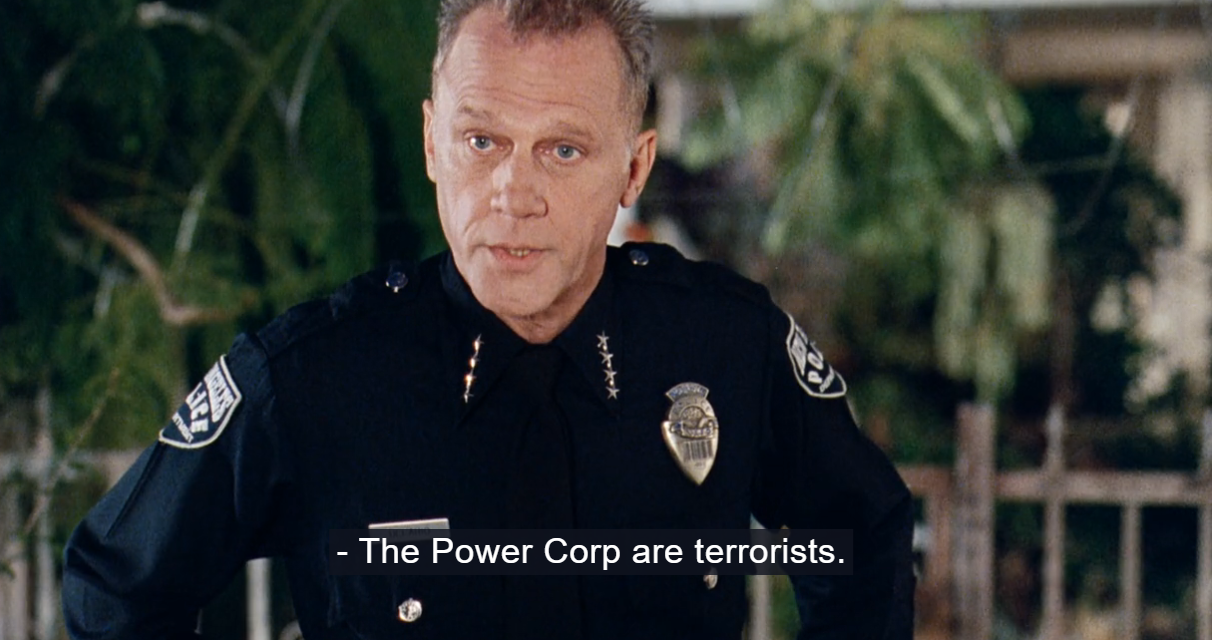
Cop Dad tells his eye-rolling teenage daughter "You should try bein' a cop sometime" before he heads out of his lovely green yard for a long day in the Thunderdome. This tension between The Power Corp (the people's freedom fighters), the barely-useful police, the theatrically overdressed gangs, and the evil Shuko make up the weak backbone of this film. Shuko wants the other half of the dragon medallion. The cops want the gangs to back down, but are overpowered. The Power Corp want to restore protection and order to New Angeles, and the gangs just want to rob and kill everyone.
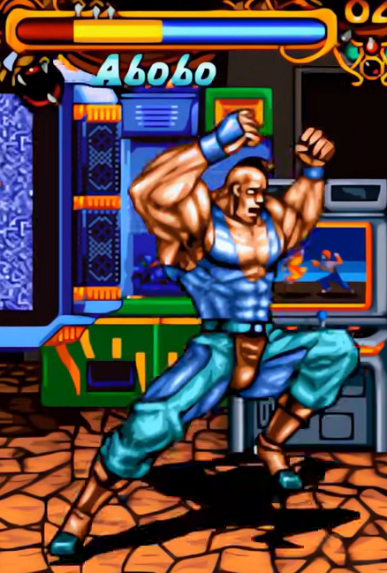
Shuko seems to have his fingers in various pies around New Angeles. The monster-truck driving gangsters report to him that Satori has the other half of the dragon medallion, but fail to capture it. As punishment, gang leader Abobo is somehow transformed into a huge monster, something between a Garbage Pail Kid and a Ninja Turtle.
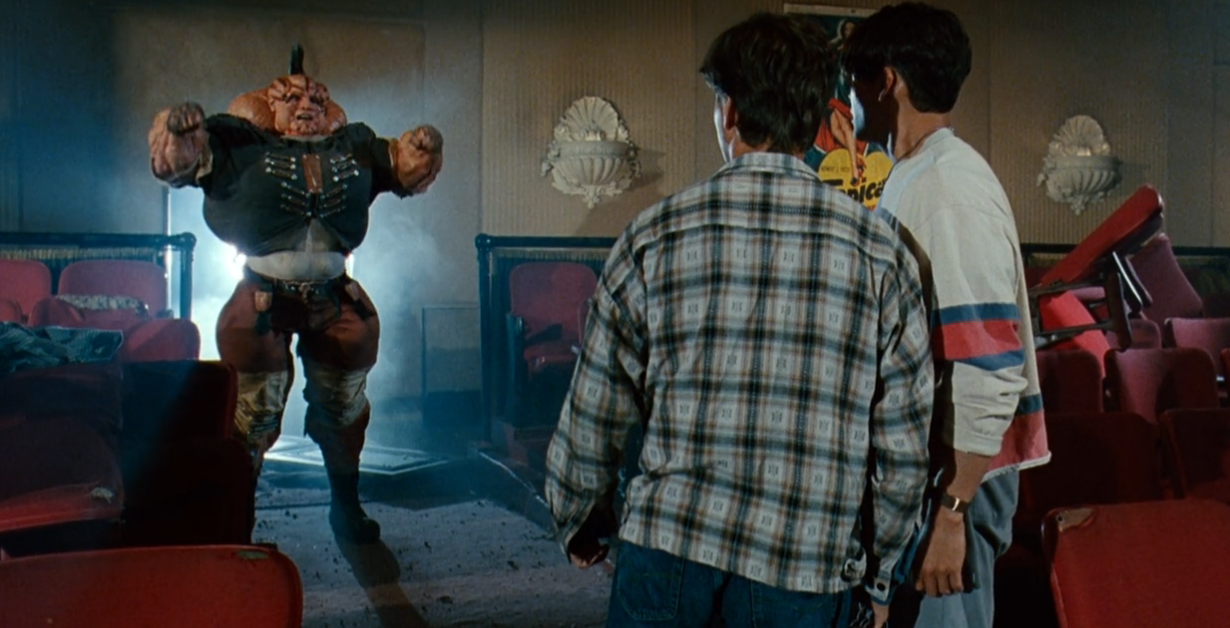
There was a moment at the very beginning of his introduction where the door of the theater (the Lee brothers'... home? Maybe?) blows into the room on a cloud of dust and light, which looked great actually. Then this actor in these insane inflated prosthetics stepped through the smoke, back-lit, with dramatic music and growling. For just a moment I was interested and intrigued. It's not CG, of course, so they really had to make this miserable prosthetic suit. And it looks good! It's overwrought, cartoonish and mad, but it makes an impact.
The Lee brothers' reaction? They look at each other, deadpan– take a beat– and both scream directly at each other and take off running in the other direction. It is 100% Looney Tunes. If I sound a little fatigued writing this, it's because the tiny moment of interest is immediately quashed by the childish performances of the lead actors and the deadening of any tension by the comic relief.
(In the game, Abobo was just a huge dude.)
This segment of the movie is one of the more interesting parts of the whole film– Shuko shows up at the theater building and fights Satori for the dragon medallion while Billy and Jimmy try to humorously incapacitate Abobo by doing things like tangling him in a net. The gentle nonviolence is immediately counteracted by Shuko revealing the power of his half of the medallion: he can use it to activate "The Power of the Soul" and become a shadow shape and possess people– in this case, Satori! Holy choreographed martial arts battle, Batman! Existential dread and discomfort ensue as the kids in the audience wonder if Satori is in actual danger. The brothers disengage from Abobo, Satori throws off the psychic influence, but Shuko has his revenge: the theater is doused in gasoline and he sets it on fire and escapes. Shuko urges the brothers to run away with her half of the dragon medallion, then burns to death horribly.
Barely emotionally affected, Billy and Jimmy wander about the city for a bit, then stumble (literally) into a quirky underground hideout: a psychedelic crayon-colored Nickelodeon Studios set. The denizens of this suspiciously over-decorated set are the Lost Boys of this movie, complete with their very own Wendy.
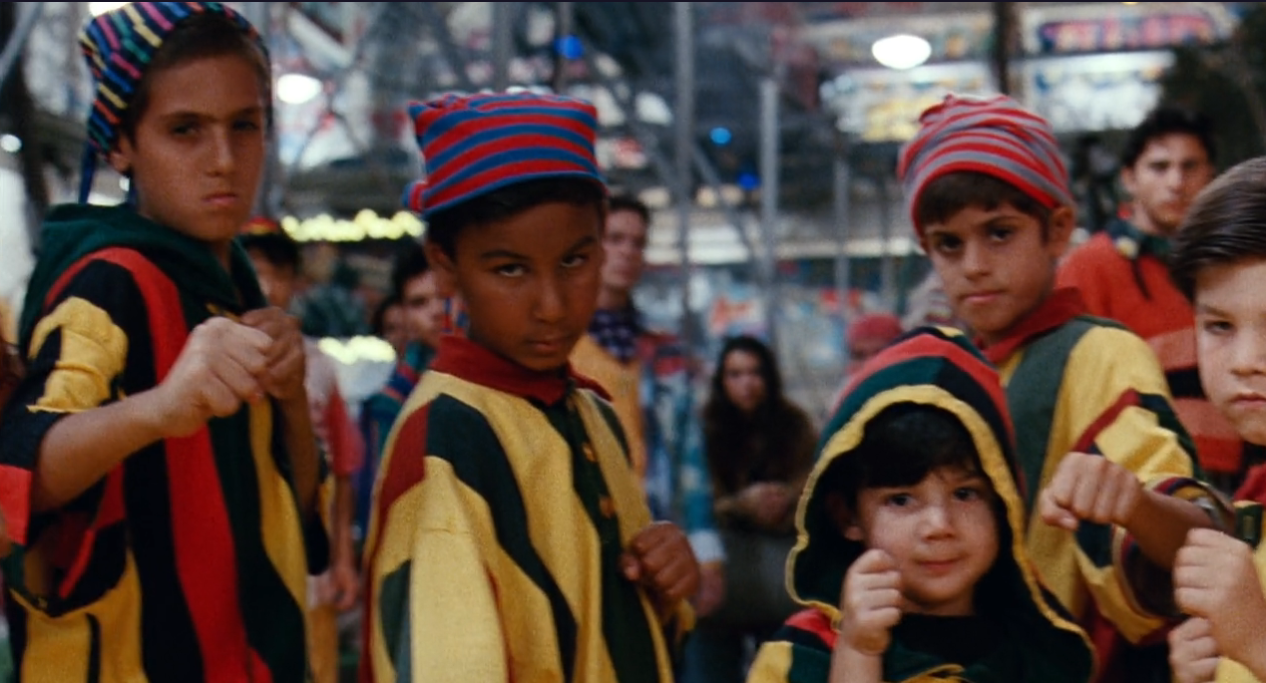
THIS is the Power Corp, the terrorists who fight the gang influence for the good of the community (apparently). Orphans of all ages live here, "the only safe place for them" since the city is so unsafe by night. Their leader is, naturally, the only girl we've met in the whole movie since Satori is now blown to shit: Marian!
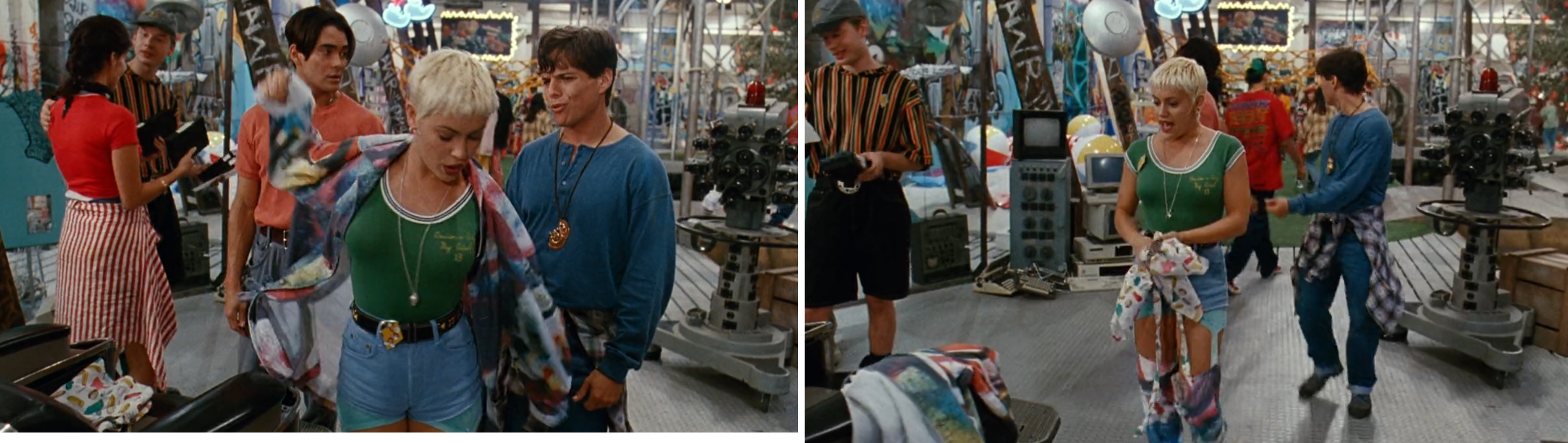
Marian's at-home look is gone now, her long brown wig shed to reveal an aggro Acid Burn bleached pixie cut, denim shorts with turquoise garters and a hell of a lot of spray-painted overclothing. Please take a moment to appreciate the high fashion shown above, because her outfit is goddamn amazing.
Everyone else in the Power Corp (I know it really should probably be "Corps", but they spell it Corp when they show it on the news channel) is also dressed with little regard for color theory or dignity, and I'm here for it. It's like BREAKIN' 2: ELECTRIC BOOGALOO and HACKERS had a baby, but the baby was emotionally neglected and grew up with a lot of resentment and masked its empty soul forever behind some flat, even TV lighting.
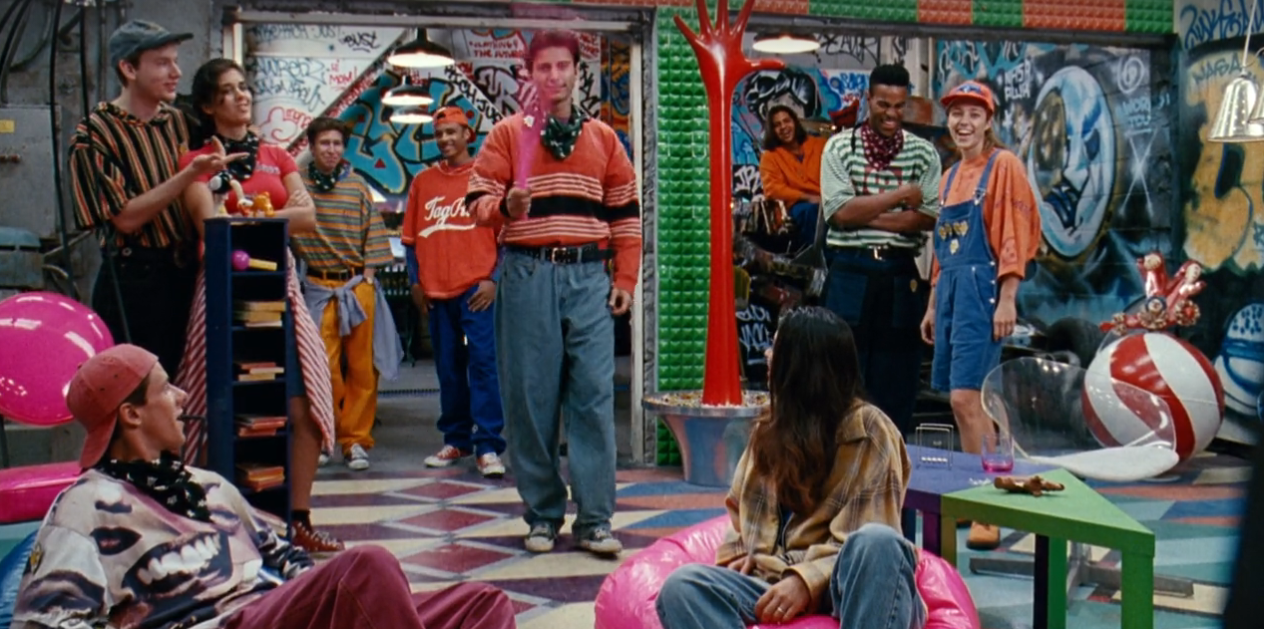
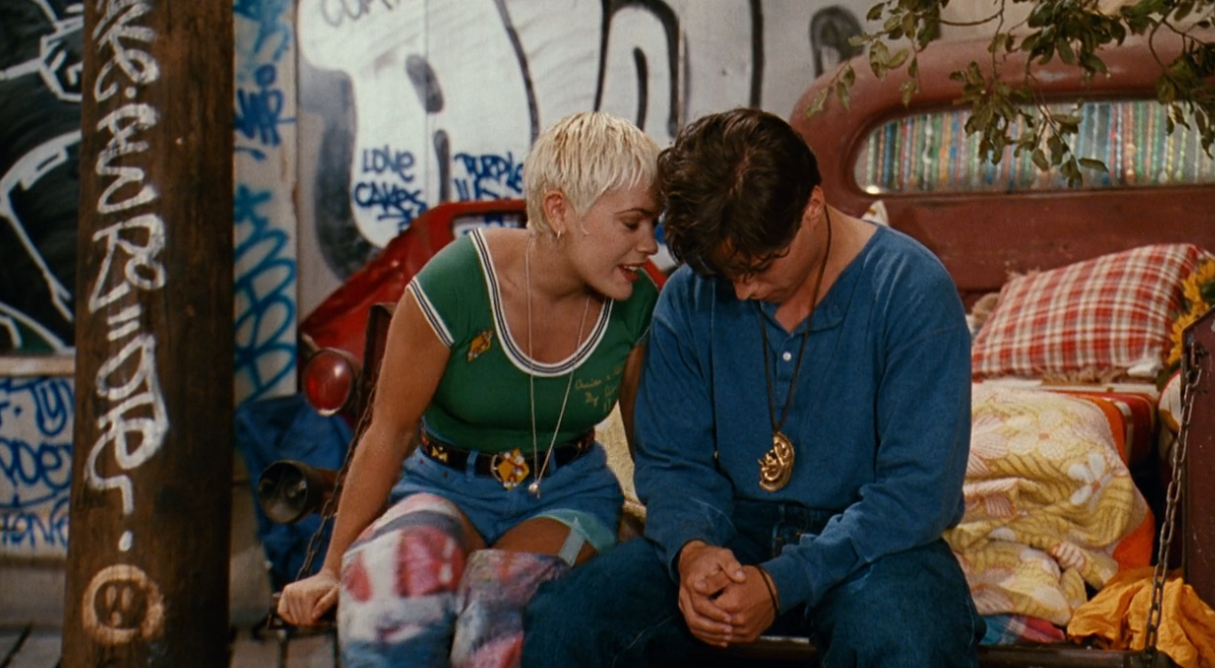
Anyway, Marian hatches a plan that will benefit everybody (except Shuko): the three of them should break into the Shin-Ra tower and steal the other half of the medallion, by creeping through the air ducts or something and fishing the medallion off Shuko's desk while his back is turned. Should they wait until he's not physically in the room, maybe? No, of course not! That's not good cartoon logic! The most visually amusing way to steal the medallion would be to lift it off the desk while at least four adults are in the room, so we're doing that!
Well, it fails, and Jimmy is captured. Billy and Marian flee back to the cheerful underground shelter. They can't figure out how to activate Billy's half of the medallion. While they ponder how to advance the plot, the plot unexpectedly comes to them! Shuko and his goons bust into the secret hideout, because they really want that goddamn medallion! Jimmy is with the enemy, as Shuko has possessed him with the dragon medallion's shadow power, and he tries to use Shadow Puppet Jimmy to attack Billy and Marian.
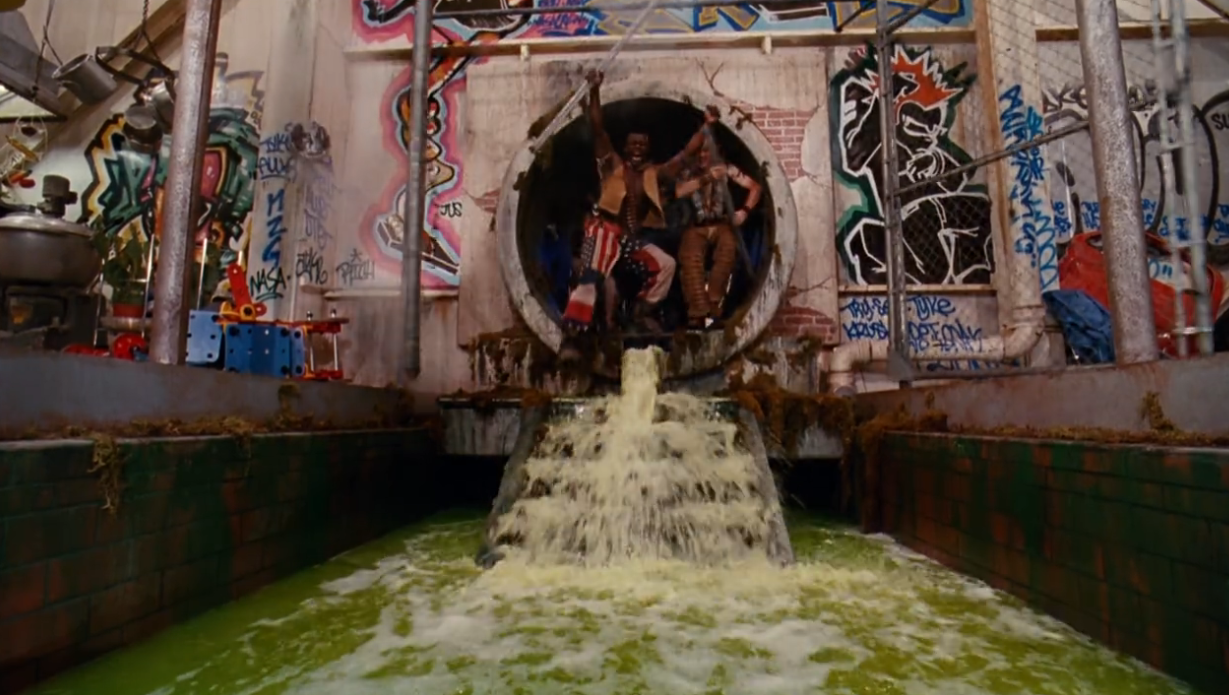
I can't help but be cheered up by all these brightly-dressed dancers popping through this sewer set to kick some ass in a nonlethal PG-13 manner.
During this climactic battle, Marian realizes (or remembers, or invents) that whoever possess the medallions cannot harm each other with the other half: Billy accidentally activates his medallion's power (The Power of the Body) and becomes immune to Shuko's shadow possession. This annoys Shuko, who releases Jimmy from the spell and manages to snatch up Billy's half of the medallion. This is easier than it should be, because instead of keeping it in a lock box, bank vault or combination safe, Billy has decided to wear it on the outside of his shirt at all times.
With the medallion halves united, you'd think Shuko would ascend and become unstoppable. This is kind of true: he manages to turn into multiple shadow-katana-wielding shadow warriors, with the help of primordial CG graphics. Just when all seems lost, Abobo, who has gone from being a mindless dangerous beast to a reformed lovable lummox, turns on his master and tells Marian that the shadow-ninja can be defeated by the power of light. I mean, not the Power of Light, just actual normal light. They turn the lights on and the shadows are driven back, the Lee brothers gain control of the two halves of the dragon medallion, and FINALLY we get the money shot we were all waiting for: Mark Dacascos's gorgeous arms in a moderately stupid Double Dragon outfit!
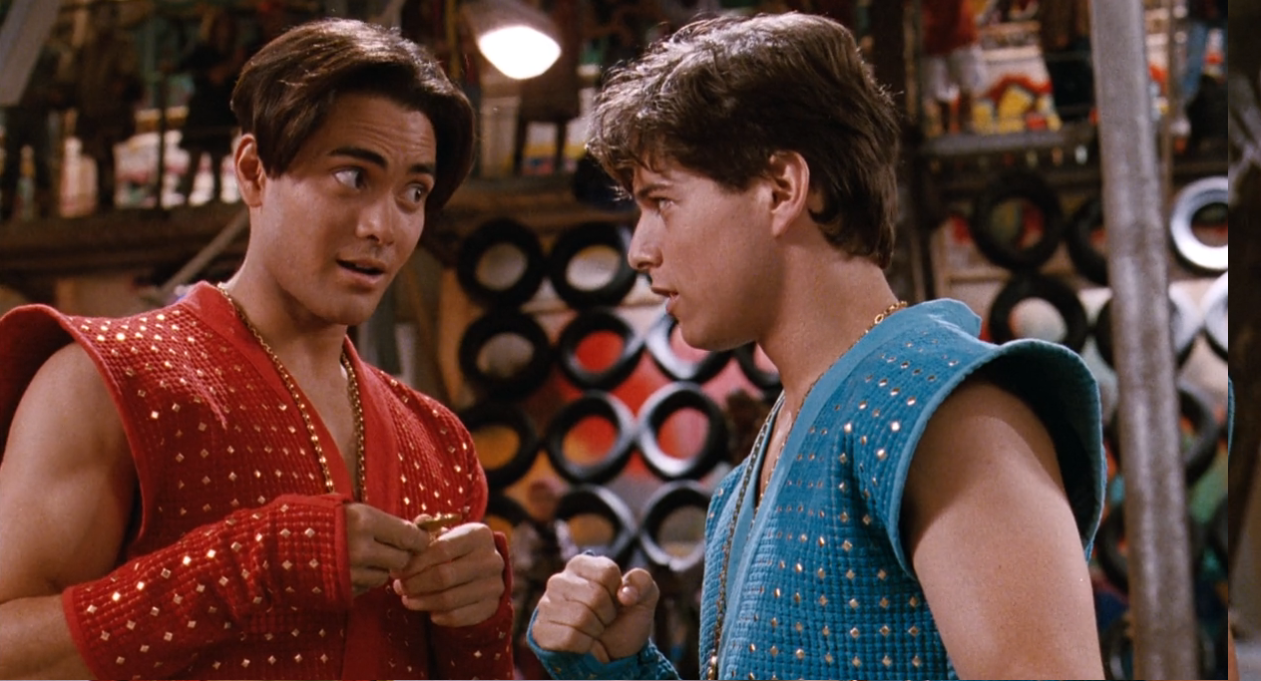
Satori appears one last time in a shimmering tornado effect, giving them ghostly words of encouragement. They look at her respectfully, but do not otherwise acknowledge her ghostly presence or this psychedelic confirmation of an afterlife.
After all this time and effort, they do not kill Shuko or even beat his ass into oblivion. They allow him a few humorous one-liners ("Hey, I'm sorry about your theater. I'll buy you a new one") and kick him in the chest, knocking him down. Then they use the power of the medallion to possess him and do silly things like slap himself in the face. When the cops suddenly roll in for the last 30 seconds of the movie, possessed Shuko offers them a check for $129 million to pay restitution, effectively fully re-funding the police so they can now totally suppress the violent gangs. Shuko is taken to jail (I don't remember why) and Billy and Jimmy are left in charge of the Double Dragon medallion, and drive off with Marian and Abobo, happily ever after.
I don't know exactly what went wrong with DOUBLE DRAGON. The screenshots above look great, because this movie looks great. If you haven't sat through this boring mess of a film, you might be surprised to read all that and then hear me tell you that this movie is a soulless slog. How can it be?? It's got everything that a mid-90s martial arts action film could possibly want, and I didn't even mention that halfway through the movie there's a boat chase with a VERY respectable 'splosion:
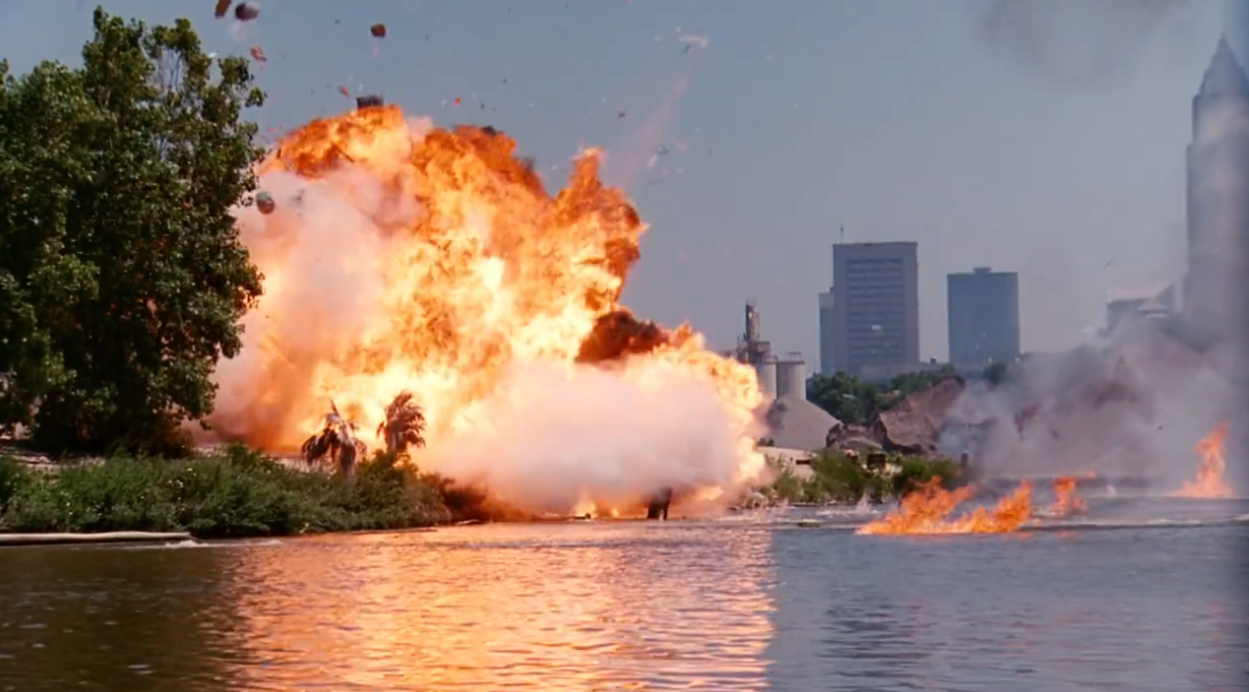
"For real? This movie's got 'splosions? How could you possibly get bored with prosthetics, choreographed fights, stupidly decorated cars, hand-drawn glow effects, CG shadow battles, crooked cops, punk gangs and graffiti-stuffed underground art studio lairs?"
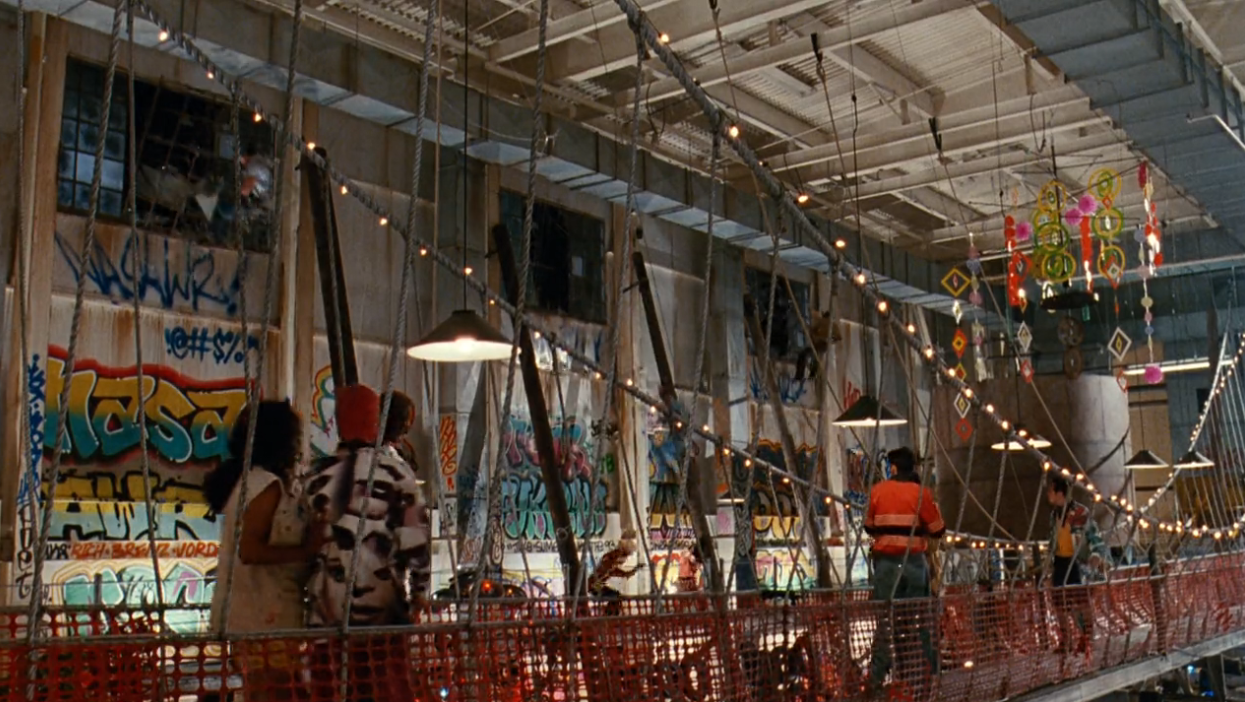
I am certain that the entire production team asked the same. Reviews for the movie were poor when it came out, and have remained poor ever since.
The Washington Post called it "clumsily paced" and "amateurishly acted" by kids "so upbeat they might have escaped from a road tour of Annie". -Wikipedia
A really horrible movie that insults fans of the Double Dragon series. What could had been a decent martial arts flick turn out to be a total train wreck that was made to torture little kids. I watched this movie when I was younger and I hated it. Avoid it like the plague. -Trevor12, IMDB user, review posted 2001
People often times wonder why Robert Patrick and Mark Dacascos never got that far in their careers. Well for those that are curious, here is your reason. Double Dragon is easily one of the worst video game adaptions and from what I remember about the video game, this isn't one that is all that hard to adapt. Indeed had this been done as an Indianna Jones style thriller with numerous martial arts fights, we might have had something. What the movie ends up being is a cheeseball adaption that fails to engage anyone over the age of 11. Although i'm not sure even if small children will enjoy something so stupid. It's a bad movie. Just plain bad. -Fmarkland32, IMDB user, review posted 2006
The special effects in DOUBLE DRAGON are surprisingly good. The wobbly phasing/shadow-attack effects look good for the time and are still charming in 2026. The prosthetics for Abobo are impressive and frightening, if rather rubbery. The sets all look truly excellent: some really good stuff in here that equal the highest-budget Cannon films. The matte paintings are imaginative, the costumes distinct, the lighting and color all effective and attractive.
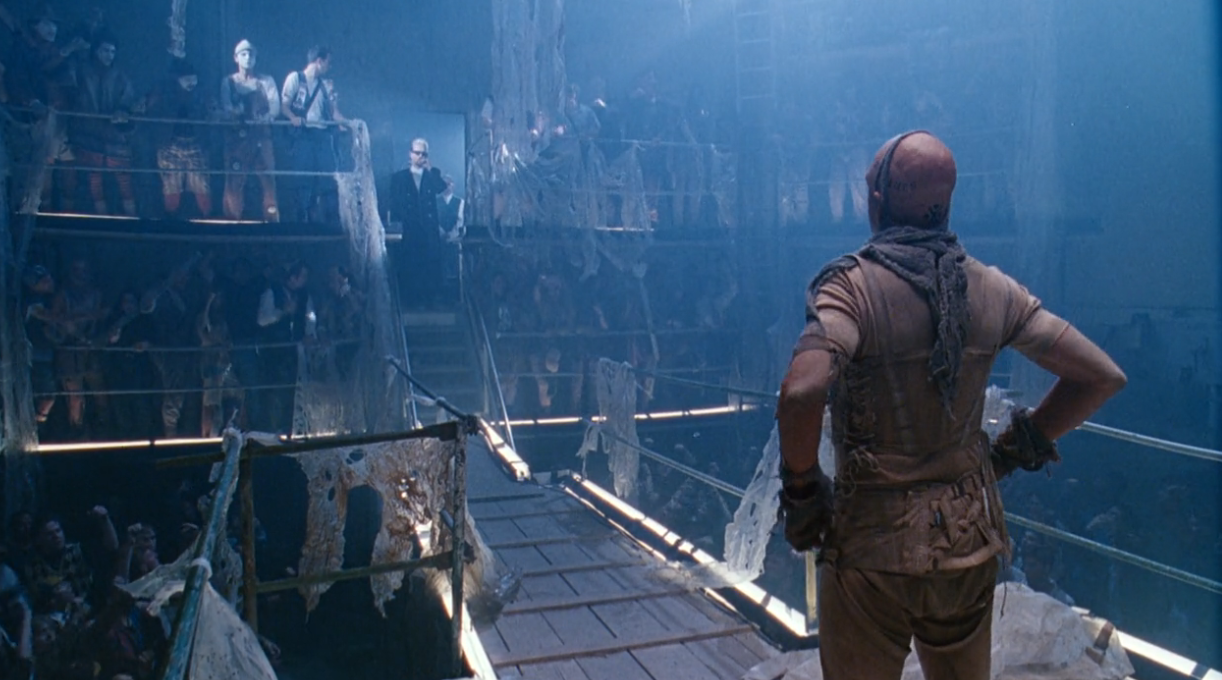
I'm telling you, it's not the elements or the visuals. It might not even totally be the performances. Robert Patrick (Shuko) is hamming it up in the finest tradition of cartoon villains, and he walks a delightful line of creepy and funny.
The Lee Brothers are not bad performances, but they are bad characters. The slapstick childishness of the characters is at odds with the stakes the movie tries to set up. Satori, the mother/guardian of the boys, dies in the movie and we don't even get to mourn– the lads just keep moving on to the next adventure. There is a bit of romantic tension with Marian, but no kiss. Marian rebels against her father's Law & Order persona, and is really a freedom fighter, but is basically relegated to a support position. Although New Angeles is set up as filthy, lawless, and deadly, gangsters neither hurt anyone nor ever really get hurt. The horrifying mutant who tries to kill our main characters changes his mind and becomes a silly sidekick. This is the core of the real problem: DOUBLE DRAGON doesn't commit to being either a kids' adventure movie or a teen action movie. It never goes far enough in either direction. It's too dark and complex to appeal to elementary school children, but it's too goofy and cheesy to appeal to young adults.
Just like the SUPER MARIO BROS. movie, DOUBLE DRAGON is what happens when the film industry is trying to feel out a whole new genre. You can sense the first tendrils of what will later become much more successful adaptations like RESIDENT EVIL (2002) and even MORTAL KOMBAT (1995), made just one year after DOUBLE DRAGON. (Coincidentally, or not, both aforementioned films were directed by Paul W.S. Anderson. Does a successful video game adaptation movie require a writer/director who has the mind of a 12 year old boy?) You can also see exactly what didn't work. In DOUBLE DRAGON, all the steps taken to soften and dumb down the tension are where the movie falters. The humor might work on an 8-year-old, but it kills the flow for anyone trying to watch this as a martial arts fantasy film. The pacing is weird: some scenes fly by, taking their exposition with them, and some drag on long enough for you to think very firmly that they should have been cut.
Poor DOUBLE DRAGON. The second video game film adaptation ever made trips over its own feet the entire runtime. It's got all the elements of a delightful 90s romp, but it ends up being spiritless, tired and flat as a week-old Diet Dr. Pepper. If you haven't seen it, there is also a Rifftrax treatment available on Tubi; but I felt that even the illustrious Kevin, Mike and Bill couldn't inject enough interest to keep this movie's face above water.
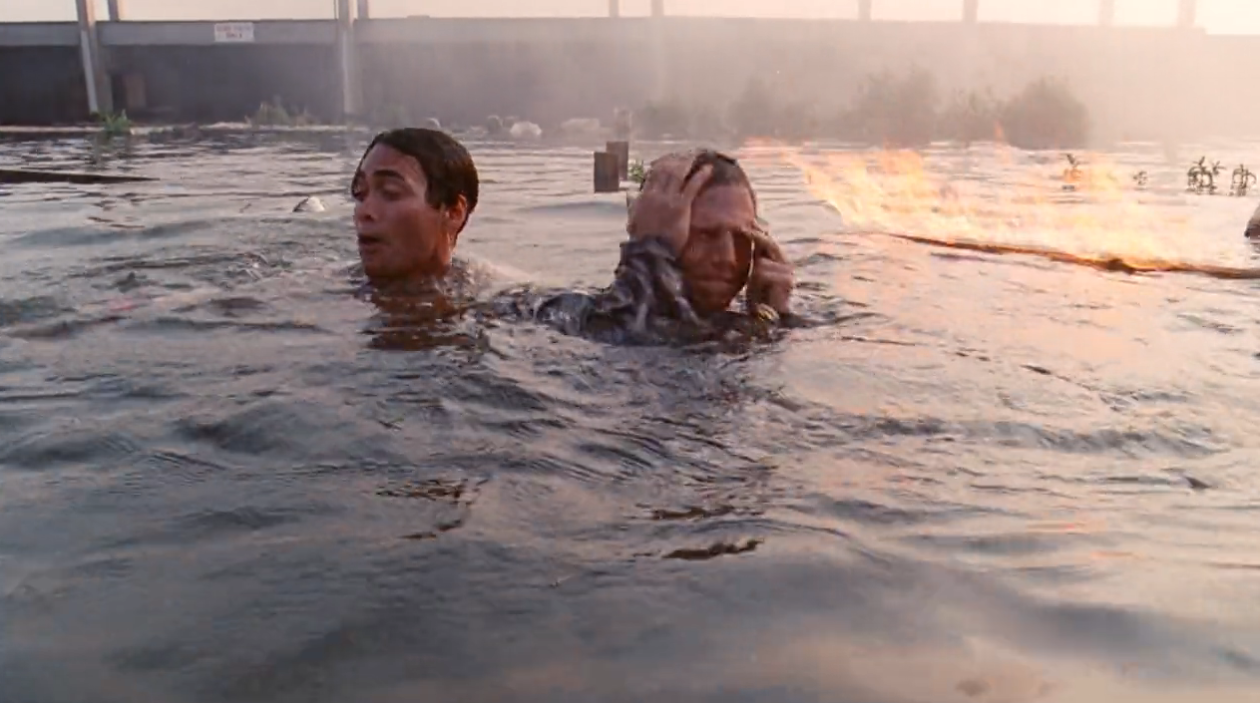
In the end, it's a shockingly high-effort movie, which makes its boring emptiness all the more bewildering. Director James Yukich waited 5 years before he directed another movie, 1999's A FARE TO REMEMBER, and then went back to music videos and TV specials. He never directed another feature film.
DOUBLE DRAGON deserves a respectful nod as it stands in the history of video game/movie crossovers, but if you want a really delightful time, reach for MORTAL KOMBAT (1995) instead. Christopher Lambert won't let you down.
Personal Rating: 3.5/10. Poor script, inconsistent pacing and neutral tone kills what could have been a great campy movie. Probably a lot better with an edible?
DOUBLE DRAGON and RIFFTRAX: DOUBLE DRAGON are both available on Tubi.

This article was written by a real human without any use of AI.